Blogs
3D Printing Workshops: What You’ll Learn & Who Should Attend
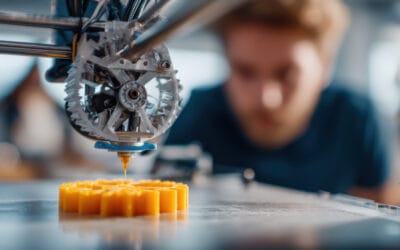
3D printing workshops are being embraced more widely across Ontario, particularly in areas like St. Catharines where local makers and small businesses seek hands-on experience. Design basics, printer operation, and troubleshooting common issues that frustrate beginners are typically covered in these sessions. As it turns out, most participants leave with their first successful print and enough confidence to tackle their next project. The workshops are designed for anyone from curious hobbyists to startup founders who need prototypes but lack the technical background. That combination of practical skills and creative problem-solving gets people hooked pretty quickly.
CAD Help for Beginners: Design Assistance Options That Work
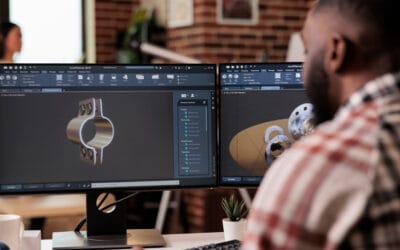
Roughly 70% of first-time users are intimidated by CAD software, based on available data from design education surveys. As it turns out, multiple assistance pathways exist when the learning curve becomes a roadblock. Thousands of hobbyists and small business owners who need custom parts but lack technical skills are being served by free online tutorials, community forums, and professional design services. Design assistance is often provided by local 3D printing services as part of their workflow. Collaboration bridges the gap between having an idea and creating a working design more often than solo learning does.
Why 3D Prints Fail: Common Problems & Professional Solutions
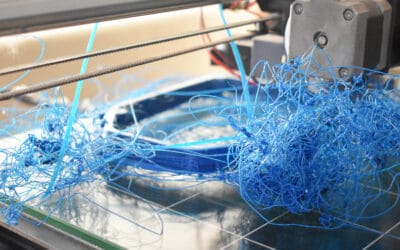
Failed 3D prints are encountered more often than most people realize, even with expensive home printers. Roughly 70% of printing failures are caused by poor bed adhesion, incorrect temperatures, and inadequate support structures. As it turns out, many issues that seem random actually follow predictable patterns; these can be prevented with the right setup and experience. Problems are spotted before they happen by professional 3D printing services, using calibrated equipment and proven workflows. Small details that get overlooked at home often determine the difference between a failed print and a perfect one.
3D Printing Projects for Students & Educators in St Catharines
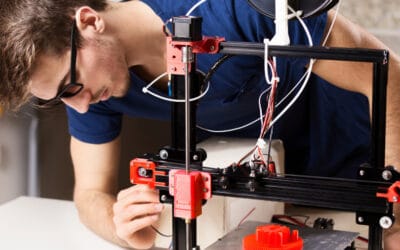
New ways to bring ideas to life through 3D printing technology are being found by schools in St Catharines. Everything from historical artifacts to working prototypes can be created by students, while tools that make abstract concepts tangible are discovered by educators. As it turns out, the biggest challenge isn’t the technology itself; it’s knowing where to start with meaningful projects. Technical complexity worries many educators, yet most successful classroom projects are built around simple, practical applications. The key often lies in connecting curriculum goals with hands-on creation… something that becomes clearer once students are seen engaging with their first printed prototype.

3D Printing for Inventors: Fast Prototype Testing Guide
A common challenge is faced by inventors when developing new products: how do you know if your idea will actually work without spending thousands on manufacturing? As it turns out, 3D printing has been adopted as the go-to solution for testing concepts quickly and affordably. Sketches can be turned into physical objects within days by professional rapid prototyping services, allowing inventors to hold their ideas, test functionality, and make improvements before expensive tooling is committed to. The process is being used by everyone from garage inventors to startup teams; real-world testing is needed to validate their concepts. What’s interesting is how the entire invention process has been changed by this approach, making it possible to fail fast and iterate quickly.
Can You 3D Print One-Off Replacement Parts? DIY Guide
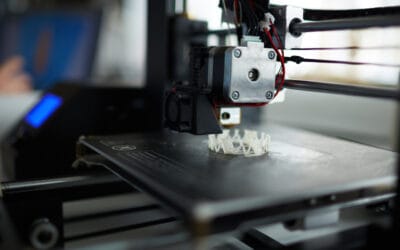
Broken appliance parts are often discontinued from stores within a few years of purchase. As it turns out, 3D printing has been adopted as a practical solution for creating one-off replacement parts that would otherwise be impossible to find. Non-load-bearing components like knobs, brackets, and housing pieces are handled particularly well by the technology. Durable plastics that can handle everyday use are typically used for custom parts. The process involves measuring the original part, creating or finding a digital design, and selecting appropriate materials. While professional-grade equipment is required by some repairs for best results, basic replacement parts are found successful by many homeowners. That said, the line between simple fixes and complex engineering continues to shift as improvements are made to the technology.
PLA vs ABS vs PETG: Which Filament is Best for Your Project?
The right 3D printing filament can be chosen before your project even starts, though this decision often makes or breaks the final result. Beginner-friendly printing with decent strength is offered by PLA, while durability and heat resistance that’s been trusted in manufacturing for decades gets brought by ABS. PETG sits somewhere in the middle; easier printing than ABS gets combined with better chemical resistance than PLA. As it turns out, the “best” filament often depends more on your specific application than on any universal ranking. Different reasons lead professionals to choose each material, and what works perfectly for a prototype might fail completely in a functional part. How makers approach their projects continues to be shaped by that balance between printability and performance.
How Strong Are 3D Printed Parts? Strength Guide & When to Use
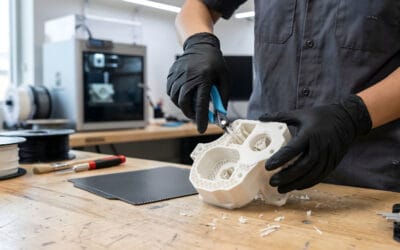
3D printed parts can be surprisingly strong, though their durability gets influenced heavily by material choice, print settings, and design orientation. As it turns out, a well-printed PLA part can handle more stress than many people expect; specialized materials like PETG or ABS are used in automotive and aerospace applications. The strength question becomes complicated when layer adhesion and print direction are considered. From what we’ve seen, most hobbyists underestimate what’s possible with proper technique, but they also overestimate what basic home printers can achieve consistently. The real answer usually sits somewhere between “stronger than you think” and “not quite industrial grade.”
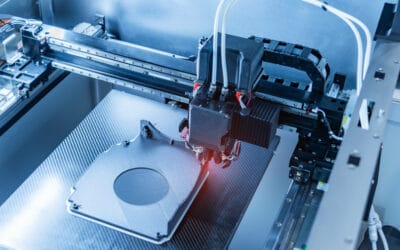
Best 3D Printing Materials for Prototypes: Strength vs Flexibility
Prototype projects are often made or broken by material choice, though cost alone is what many designers consider when filaments are selected. As it turns out, what your prototype needs to accomplish is what the “best” material depends on entirely. Excellent surface finish and ease of printing are offered by PLA, while a balance of strength and flexibility that works well for functional parts is provided by PETG. ABS remains popular for its durability; more careful temperature control during printing is required though. TPU and other flexible materials get chosen when prototypes need to bend or compress. Whether you prioritize appearance, mechanical properties, or printing reliability is what the decision usually comes down to… though sometimes, I suppose, all three are needed.