
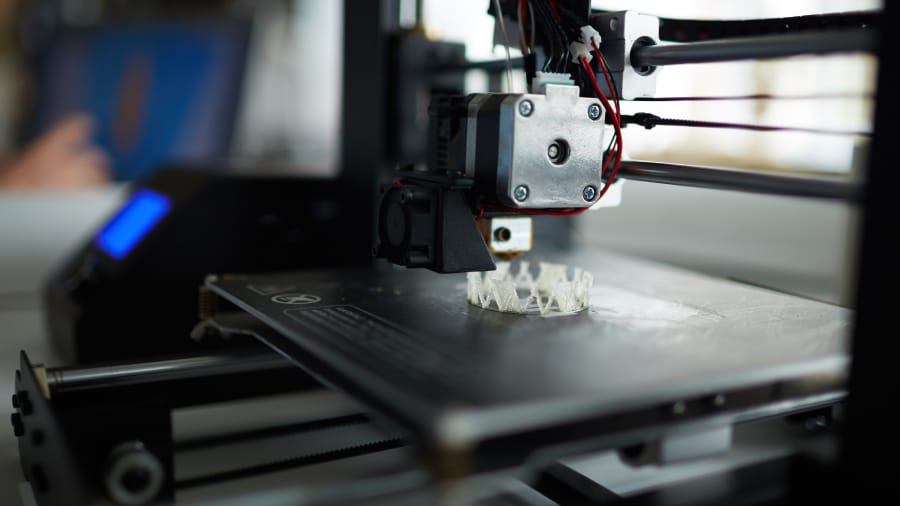
Yes, many one-off replacement parts for home repairs can be 3D printed by you, particularly non-structural components like knobs, clips, and brackets. Success usually depends on the part’s complexity and material requirements; simple plastic parts work best, while professional services may be needed for metal or high-stress components.
Fast Facts:
- Parts unavailable for 5+ years after product discontinuation can be reproduced through 3D printing
- Most household repair applications are handled by PLA and PETG plastics
- 60-80% less than custom manufacturing is typically charged by professional services
- Design files for common appliance parts are often found available online
- Print times range from 30 minutes to 8 hours depending on size and complexity
Understanding What Can Be 3D Printed
Categories that work well with 3D printing are fallen into by most household replacement parts. Knobs, handles, and decorative trim pieces are straightforward projects. Issues are usually avoided when brackets and mounting hardware are printed too. But more thought is required by mechanical components with moving parts.
Stress load is the key factor. Different forces are experienced by a dishwasher door handle than a cabinet knob. From what we’ve seen, these differences are often underestimated by homeowners. This was learned by one St. Catharines resident after printing a washing machine part that lasted three weeks. The replacement worked; the material choice was wrong.
Material Selection for Home Repairs
Low-stress applications like light switches and decorative pieces are handled by PLA plastic. It’s easy to print and relatively inexpensive. Better durability for parts that see regular use is offered by PETG. Heat resistance is provided by ABS but more advanced printing setups are required.
Specialized materials not available to home users are often used by professional services. Parts that match or exceed original specifications are created by nylon, carbon fiber composites, and metal-filled filaments. Your specific repair needs and budget constraints determine the choice.
Getting Accurate Measurements
More than most people realize, precision matters. A knob that’s 2mm too small won’t stay attached properly. The most accurate measurements are given by digital calipers, but ruler photos work for simple shapes.
Technical drawings are provided online by many appliance manufacturers. Exact dimensions for common replacement parts are sometimes included in these. Measurement data is often shared by community forums and repair sites too. A collection of common part measurements for student projects is kept by one local educator we work with. Interesting how that resource keeps growing.
Finding or Creating Design Files
Thousands of replacement part designs are contained in online repositories like Thingiverse. Brand name and model number should be searched first. Useful results are often yielded by generic terms like “dishwasher handle” too.
CAD software skills are required for creating custom designs. Free options for beginners are offered by Fusion 360 and Tinkercad. The learning curve varies, but basic parts can be designed in a few hours. When the part is complex or critical to safety, professional design assistance helps.
When to Use Professional Services
Basic parts are handled well by home printers, but higher quality results are produced by professional equipment. Commercial-grade machines are often required by complex geometries, tight tolerances, and specialized materials.
Professional attention is deserved by safety-critical parts. Anything related to electrical systems, pressure vessels, or structural support should be evaluated by experts. Less than traditional manufacturing for one-off parts is typically cost by custom 3D printing services in Ontario. Plus, guidance through material selection and design optimization can be provided by them.
Cost Considerations and Alternatives
Under $5 usually run material costs for small parts. Larger components might cost $15-30 depending on size and complexity. Based on material usage, print time, and complexity, professional printing services charge.
These costs should be compared to original manufacturer parts, which often cost $50-200 for simple components. Another option is provided by used parts from salvage yards, but availability varies significantly. Sometimes the original design is actually improved upon by the 3D printed version.
Making Your First Replacement Part
Something simple and non-critical should be started with. A good first project is made by a missing drawer pull or broken shelf bracket. Careful measurement and appropriate materials for the application should be chosen.
The part should be test fitted before final installation. Minor adjustments are normal and expected. The original measurements and design files should be kept for future use. The same part is often needed again years later by many homeowners. If you’re in the St. Catharines area and expert guidance through the process is wanted, your repair ideas can be helped to turn into reality by professional services. Visit our website to learn more about custom 3D printing solutions.
Mini-FAQ:
Q: What types of replacement parts work best for 3D printing? Simple plastic components like drawer handles, appliance knobs, and mounting brackets are printed successfully most often. Complex mechanical parts with tight tolerances can be challenging. That still surprises people.
Q: Can 3D printed parts handle the same stress as originals? It depends on the material and design. Standard plastics usually work fine for basic household parts. Reinforcement or professional materials might be needed by load-bearing components.
Q: How do you get the measurements right? Precise measurements are given by calipers, but photos with rulers work too. The part is traced on paper first by many people. Digital scanning is becoming more common.
Q: What if the part breaks again? That’s often a design opportunity. The file can be modified by you to make it stronger or add features the original lacked.