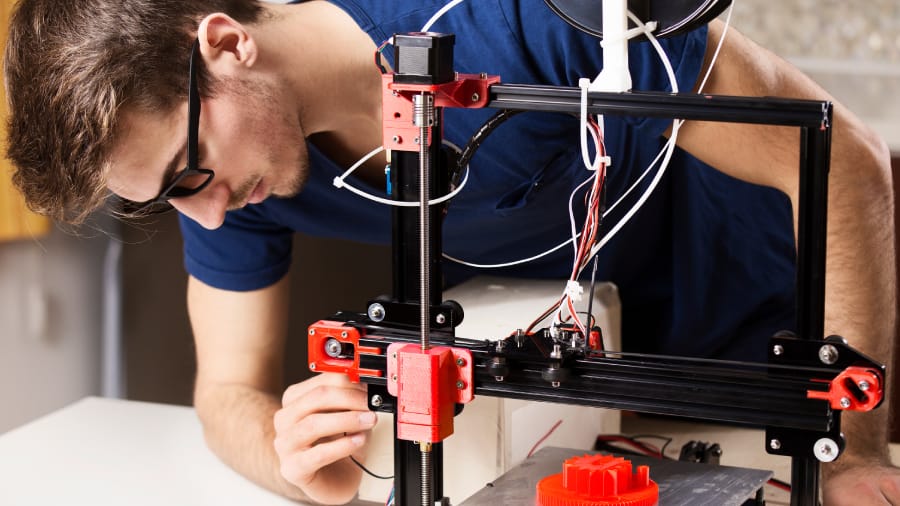
Practical ways to create custom learning tools, prototypes, and interactive models are offered to students and educators in St Catharines through 3D printing. Projects usually range from simple geometric shapes to complex working mechanisms; popular options include historical replicas, science models, and engineering prototypes that connect directly to curriculum goals.
Fast Facts
- Over 75% of educators report increased student engagement when using 3D printed materials in lessons
- Basic classroom projects typically cost $2-15 in materials per student
- Students can design and print functional items like phone stands, organizers, and puzzle pieces
- Local 3D printing services in St Catharines can produce classroom sets within 2-3 days
- Most educational 3D printing projects require no prior CAD experience to get started
Getting Started with Educational 3D Printing
3D printing works best when it’s tied to existing curriculum goals, most educators in St Catharines discover. Your lesson plans don’t need to be reinvented. Instead, look for topics where physical models would help students understand better. Cell structures might be printed by a grade 10 biology class, while ancient artifacts could be recreated by history students. Real learning challenges are solved by the technology, not just because it’s new and exciting.
Science and STEM Applications
Molecular models are often where chemistry teachers start since these are expensive to buy but cheap to print. Complex protein structures can be held by students, or they can see how atoms bond in three dimensions. When students design and test their own pulleys, levers, or gear systems, physics concepts become clearer. Different bridge designs were printed by students in one class we worked with, then tested with weights. As much was taught by the failures as the successes.
History and Social Studies Projects
When students can examine detailed replicas, historical artifacts come alive. Ancient coins, architectural elements, or archaeological finds become accessible to every classroom. Aqueduct sections might be printed by students studying the Roman Empire to understand engineering principles. Topographical maps that show elevation changes students can actually feel benefit geography lessons. These projects work because distant concepts are made immediate and personal.
Math and Geometry Visualization
Through 3D printing, abstract mathematical concepts become concrete. Complex polyhedra can be printed and manipulated by students struggling with geometric shapes. Models showing how functions change over time might be created by calculus students. When students can hold physical representations of different ratios, fraction concepts get clearer. Students who learn better through touch and manipulation are helped by the tactile element.
Art and Design Integration
Students express themselves while learning technical skills through creative projects. Creativity with problem-solving is combined in custom jewelry, decorative items, or functional art pieces. Design constraints, material properties, and iterative improvement are learned about by students. The technical side is enjoyed as much as the artistic elements by many who discover this. Plus, something they’re proud to show family and friends is taken home by them.
Practical Classroom Tools
Custom solutions for specific classroom needs are often printed by teachers. Pencil holders designed for left-handed students, organizers that fit perfectly in desk drawers, or game pieces for educational activities. Double duty is served by these projects by solving real problems while teaching design thinking. How 3D printing addresses everyday challenges is seen by students, not just fancy prototypes.
Working with Local 3D Printing Services
Their own equipment isn’t always needed by schools in St Catharines to benefit from 3D printing projects. Classroom-sized orders can be handled efficiently by local services, often with educational discounts. Design and learning are focused on by students while technical printing details are handled by professionals. This approach works particularly well for schools just starting with 3D printing or those with limited budgets. When you’re ready to explore what’s possible for your classroom, I suppose, visit our website to discuss your specific project needs.
Mini-FAQ
Q: What’s the best starter project for students new to 3D printing? Simple keychains or name tags work well because they’re personal and functional. Immediate results can be seen by students without getting overwhelmed by complex design requirements. Quick wins like these build confidence fast.
Q: Do we need expensive software for educational 3D printing projects? Free options like Tinkercad handle most classroom needs perfectly. Basic shapes can be created by students, existing designs modified, and fundamental concepts learned without any cost barriers. Professional software can wait.
Q: How long do typical student projects take to print? Most classroom-friendly designs are completed within 1-3 hours of print time. Smaller items like math manipulatives or science models usually finish during a single class period. That still surprises people.
Q: Can 3D printing really improve learning outcomes? Information is retained better by students when they can touch and manipulate physical models, research shows. Abstract concepts become concrete when they’re built by students themselves. The hands-on element makes a real difference.